Copier Leasing vs. Buying: Which Option Best Fits Your Business Needs?
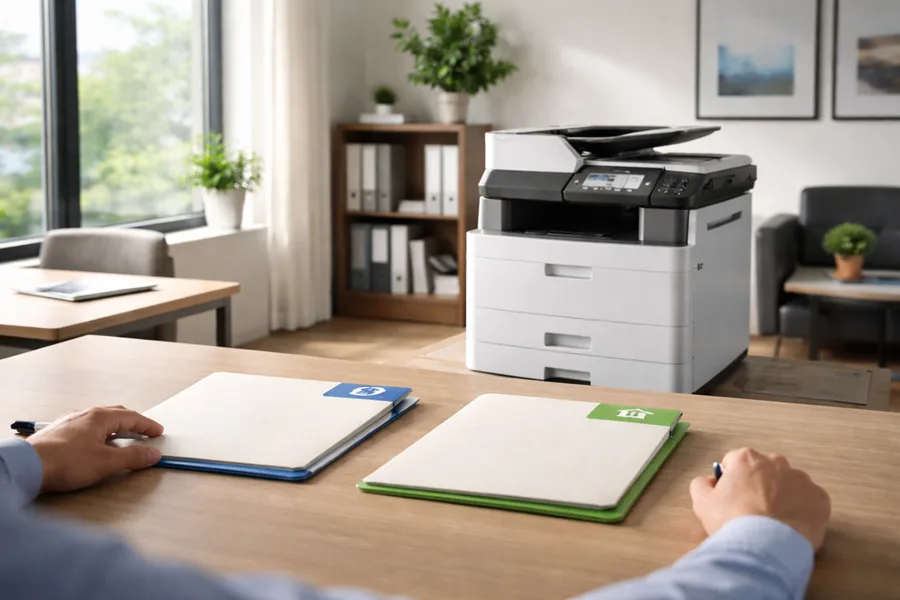
Choosing whether to lease or buy a copier is more than a purchase decision — it affects cash flow, productivity, and how your team works every day. This guide walks through the key pros and cons of each route so you can match the right option to your operational needs and budget. We’ll compare leasing’s flexibility with the control of ownership, break down cost drivers, explain important lease terms, and show how managed print services can support either choice.
What Are the Key Benefits and Drawbacks of Leasing a Copier?
Leasing a copier can be a smart move for many organizations, but it comes with trade-offs. The biggest upside is financial flexibility: leases usually require a lower initial outlay than buying, which frees up cash for other priorities. Many leases also bundle maintenance and support, reducing surprise repair bills and downtime.
On the downside, lease payments add up over time and may exceed the cost of buying outright. Lease contracts can also restrict upgrades or swaps and may include fees for early termination or excessive wear. Weighing these factors against your growth plans and equipment needs is essential.
What Advantages Does Copier Leasing Offer for Cash Flow and Flexibility?
Leasing improves cash flow by spreading the cost of equipment into predictable monthly payments, which can free funds for hiring, marketing, or other investments. Lease terms are often flexible, letting you choose payment schedules that match seasonal revenue or budget cycles — a real benefit for startups and small businesses with limited capital.
Academic and industry research also highlights cash-flow considerations specific to leasing arrangements and their impact on financial planning.
Cash Flow Management in Business Leasing
Examines cash-flow risks in leasing arrangements (illustrated through ship financing), and proposes a tailored Cash Flow measurement model.
Optimizing cash flow management for ship financing leasing: Risk identification, risk assessment, and management strategies, 2025
Plus, many leases include service agreements that cover routine maintenance and repairs. That predictable service reduces the risk of unexpected downtime and makes budgeting easier.
What Are the Common Disadvantages and Contract Terms in Copier Leasing?
Leasing delivers flexibility but can carry higher lifetime costs. Over a multi-year term, cumulative lease payments may exceed a one-time purchase. Lease contracts also commonly require you to keep the equipment in good condition and can include charges for excessive wear, overages, or early termination.
Carefully reviewing lease language for hidden fees, end-of-term obligations, and upgrade or return conditions protects you from surprises and ensures the lease suits your long-term plans.
What Are the Advantages and Disadvantages of Buying an Office Copier?
Buying gives you ownership and control. You avoid ongoing lease payments, can modify or upgrade equipment as needed, and benefit from the asset’s residual value and depreciation for accounting purposes. For organizations that keep equipment for many years, buying often yields lower total cost of ownership.
The trade-off is the higher upfront expense and the responsibility for repairs, maintenance, and eventual replacement. That means you’ll need to plan for service, supplies, and downtime costs that a lease might otherwise cover.
How Does Ownership Impact Long-Term Savings and Asset Control?
Ownership can produce meaningful long-term savings because, after the initial purchase, you no longer have monthly lease payments. You also gain flexibility to customize, integrate, or keep equipment for as long as it remains efficient. For some businesses, owning supports tighter control over workflows and IT integration.
From an accounting standpoint, owned equipment can be depreciated, giving you tax and balance-sheet implications to factor into the decision.
What Are the Upfront Costs and Maintenance Responsibilities When Buying?
Purchasing a copier requires a larger initial investment, which varies by model, features, and capacity. You’ll also be responsible for ongoing maintenance, consumables, and unplanned repairs — all costs you should budget for when calculating total cost of ownership.
Considering both the purchase price and the expected maintenance over the machine’s useful life gives a clearer picture of the real cost of buying versus leasing.
How Do Cost Factors Compare Between Leasing and Buying a Copier?
Comparing costs means looking past the sticker price and factoring in payments, maintenance, downtime, tax effects, and resale or disposal. Depending on lease terms and your usage, leasing can be cheaper short-term but more expensive over multiple years.
What Is the Total Cost of Ownership for Copier Lease Versus Buy?
Total cost of ownership (TCO) is the right lens for this decision. Leasing often looks like the lower-cost choice at the start because of small upfront payments, but when you include all payments, service, supplies, and end-of-term charges, buying can be more economical over time.
Experts recommend evaluating acquisition, operating, maintenance, and disposal costs to make the most informed choice.
Understanding Total Cost of Ownership (TCO) for Business Decisions
TCO is a framework for evaluating all relevant costs of buying and using a product or service — acquisition, administration, maintenance and disposal — so decisions reflect the full financial impact rather than just the initial price.
Total cost of ownership, LM Ellram, 2002
How Do Tax Benefits and Depreciation Affect Leasing and Buying Decisions?
Tax treatment can tilt the balance. Lease payments are generally deductible as business expenses, offering immediate tax relief. Buying lets you claim depreciation and other capital allowances over time, which can reduce taxable income across several years. Talk with a tax advisor to see which approach best matches your cash flow and tax strategy.
What Are the Essential Terms and Conditions in Copier Lease Agreements?
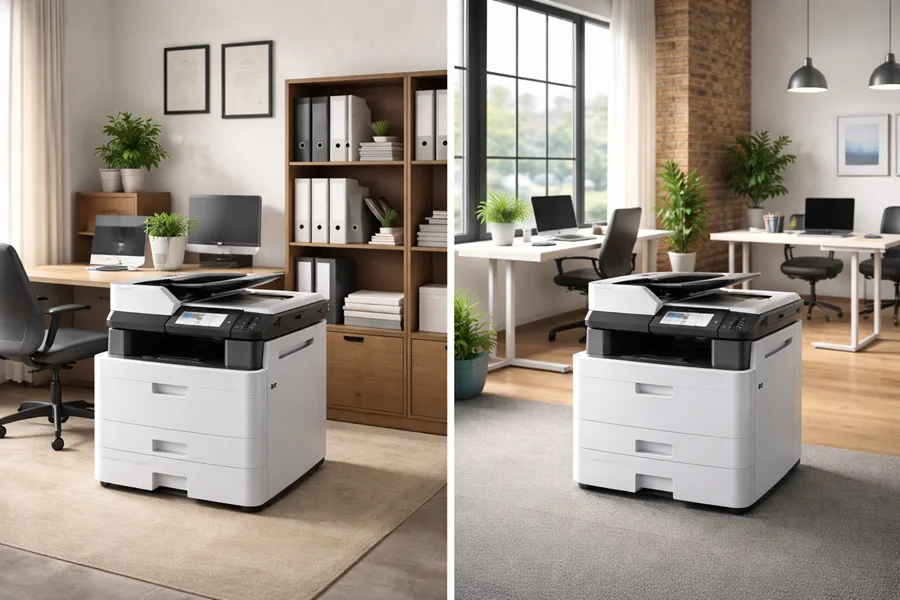
Understanding the lease’s fine print is critical. Key items include the lease length, monthly payment structure, maintenance responsibilities, upgrade rights, early termination fees, and end-of-lease options. These terms determine cost, flexibility, and long-term suitability.
What Lease Options and Upgrade Clauses Should Businesses Consider?
Look for clauses that allow technology refreshes or upgrades as your needs change. Make sure early-termination and upgrade penalties are clear and that monthly and overage charges are spelled out. The right clause can help you keep pace with changing workflows without getting locked into obsolete equipment.
Confirm that any upgrade path aligns with your operational roadmap so you’re not trapped into technology that no longer supports your team.
How Do Maintenance Contracts and End-of-Lease Choices Impact Costs?
Maintenance agreements can make leasing predictable by covering service, parts, and regular visits. But you must read what’s included — toner, parts, response times, and service caps vary. At lease end, your choices typically include returning the unit, purchasing it, or renewing the lease; each option has different cost implications.
Factor in end-of-lease fees, buyout prices, and potential penalties when modeling total cost.
How Can Managed Print Services Complement Copier Leasing and Buying?
Managed print services (MPS) are designed to reduce cost and complexity whether you lease or buy. An MPS provider can analyze usage, optimize device placement, reduce waste, and implement security controls so your printing environment runs leaner and safer.
What Benefits Do Managed Print Services Provide for Cost and Security?
MPS lowers operating costs by cutting unnecessary print volume, consolidating devices, and streamlining supplies. On the security side, MPS vendors implement access controls, secure print release, and audit trails to protect sensitive data and help meet compliance requirements.
Industry studies also examine how MPS contracts and pricing affect customer behavior and service value.
Managed Print Services: Customer Demand & Provider Interactions
Research on managed services in the print space explores contractual relationships between providers and institutional customers and shows how demand and pricing interact across observed contracts.
Empirical study on managed print services pricing, J Ning, 2014
How Does Barlop Support Businesses with Leasing, Buying, and MPS Solutions?
Barlop Business Systems delivers tailored office-equipment solutions — from short- and long-term copier leases to outright purchases and managed print programs. Family-owned and based in Miami, we’re proud to be Woman- and Minority-Owned and an authorized dealer for trusted brands like Ricoh and Sharp. Our team focuses on matching the right equipment, service plans, and financing to your unique workflow so you get reliable performance and predictable costs.